
A Crisis Designed to Last (Part One)
The Politics of the U.S. Immigration Regime

🎧 Prefer to listen? The full audio read is above.
There’s a story the United States tells about itself.
That it is a nation of immigrants. That those who arrive at its borders come seeking freedom. That while there may be excesses, the system itself remains fundamentally sound. Humane. Necessary. Just.
But what if that story is simply the state’s most powerful weapon?
What if the true function of U.S. immigration policy isn’t to offer refuge or ensure safety, but to discipline labor, suppress dissent, and obscure the material consequences of global capitalism?
What if the goal isn’t to solve a crisis, but to sustain one?
A historical materialist approach demands we look beyond narratives of cruelty or compassion. It compels us to ask: Who benefits from the crisis? What role does the border play in preserving a global economic system rooted in exploitation? And why does that system need to produce instability, both abroad and at home, to survive?
These questions lead us to an uncomfortable truth: immigration enforcement is an instrument of class power, deeply embedded in the structures of empire.
This essay begins with how that power functions at home. Part Two will trace how U.S. imperialism manufactures the very crises it claims to respond to.
Perfecting the Tools of Repression
Trump has taken a system that the Democrats spent years expanding, even as they bemoaned it, and turned it into a more direct tool of control.
Since returning to power, he has rapidly escalated immigration enforcement into an openly militarized campaign. Thousands of National Guard troops and U.S. Marines were deployed to Los Angeles to suppress dissent, conduct raids, and enforce an atmosphere of domestic fear. The message is unmistakable: immigration control is to be wielded as a deadly weapon against the political enemies of the administration.
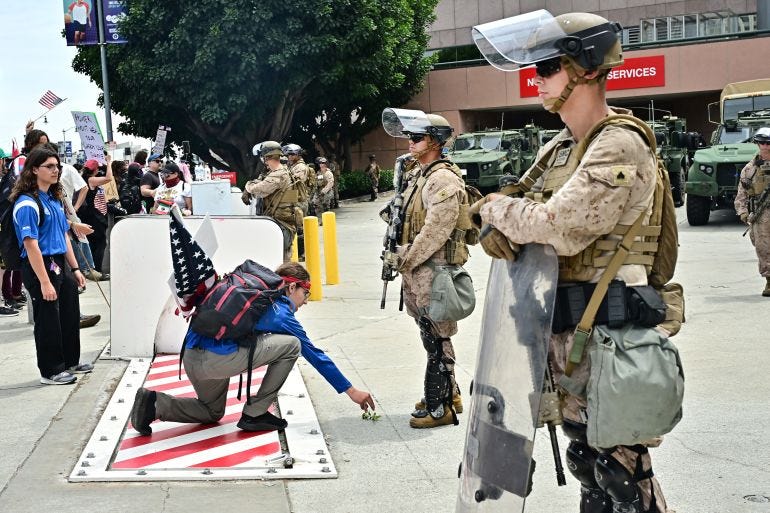
His regime has enforced sweeping mass deportations, invoked wartime emergency powers, and cast migration as a national threat requiring military discipline. The U.S. has begun deporting migrants to CECOT, a mega-prison in El Salvador notorious for torture, overcrowding, and the withholding of food and medical care, under opaque bilateral agreements. Homeland Security Secretary Kristi Noem defended the practice, stating that those deported to CECOT “should remain there for the rest of their lives.”
The repression has even extended to legal residents and visa holders, some of whom have been targeted simply for speaking out against the genocide in Palestine. The line between immigration enforcement and political punishment is dissolving. This is the core of Trump’s agenda: to transform the border apparatus into a tool of personal and political enforcement. To reassert the image of the U.S. as an embattled fortress. And to send a message to the public: speak out, and you could be next.
This logic reached a grotesque new height with the construction of “Alligator Alcatraz,” a militarized detention facility deep in the Florida Everglades. Built in just over a week, a grim reflection of U.S. priorities, on a decommissioned airstrip, the camp is surrounded by swamp and wildlife, and isolated from press access. Inside, asylum-seekers and visa holders have reported extreme heat, medical neglect, and dehumanizing conditions. The site is symbolic: a performance of power meant to terrorize and dehumanize.
Then on the Fourth of July, Trump signed into law the obscenely named One Big Beautiful Bill Act, dramatically expanding ICE’s projected budget for enforcement and deportation operations from around $10 billion to roughly $30 billion per year. $45 billion is earmarked for new detention centers, $46.6 billion for border wall construction, and billions more for surveillance infrastructure.
All of this points toward an era of escalating state violence and despotic repression. But if Trump is wielding the powers of a dictator, we must be clear: those powers were not invented by him. The tools he’s using have been newly sharpened rather than newly created. Their purpose runs deeper than any one administration. To understand that purpose, we have to examine the illusion it was designed to uphold.
Like what you’re reading?
Subscribe here for weekly essays that challenge power, not just critique it.
Managing Labor, Preserving Profits
Democrats are often presented as defenders of immigrant rights. But this defense is frequently framed in economic terms, emphasizing the utility of an underpaid and precarious labor force.
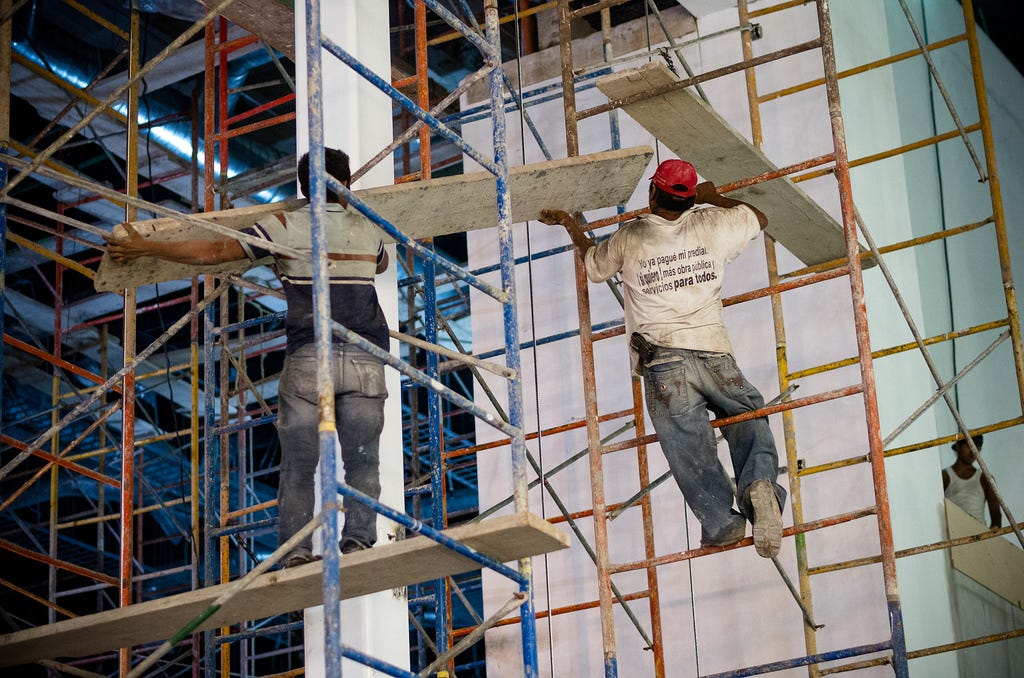
A 2024 report from the Democratic members of the Joint Economic Committee warned that Trump’s deportation plan could shrink U.S. GDP by up to 7.4% by 2028, drive up consumer prices, devastate key industries, and cost U.S.-born workers jobs. Their case is a common one from prominent liberals: undocumented labor is vital to the functioning of the economy.
The think tank Brookings, influential among Democratic policymakers, made a similar case in September 2024, writing that "occupations common among unauthorized workers, such as construction laborers and cooks, are essential to keep businesses operating.” More revealing, they added: “Unauthorized immigrants and their children also facilitate the solvency of the Social Security and Medicare systems by paying into these systems when they are not eligible to receive any benefits.”
The report concluded that “immigrants are a net fiscal positive at all levels—they pay $237,000 more in taxes over their lifetime than they receive in benefits from federal, state, and local governments.” While these estimates aren’t broken down by immigration status, the study notes that unauthorized immigrants likely produce larger net fiscal gains than authorized immigrants, since they are disproportionately of working age.
The argument was echoed more bluntly by Rep. Jasmine Crockett (D–TX), who said in March 2025:
“As long as we live in a capitalistic society, there’s always going to be someone…that will do work some of the rest of you don’t want to do.”
“They [undocumented immigrants] are really making us great in this country. They pay into taxes. And guess what? They’re not able to pull down on Social Security.”
One might argue this is a political tactic, an attempt to link immigrant rights to voter interests. But follow the logic to its conclusion, and it becomes damning. The case being made is not for the rights of migrants, but for their role as a disenfranchised underclass: invisible, deportable, and economically essential.
This is the quiet part of U.S. immigration politics. Both parties understand that undocumented labor underwrites entire sectors of the economy. Trump promises to punish it while Democrats promise to preserve it.
Continuity Beneath the Rhetoric
Trump may be escalating the war on migrants, but the system was refined under Democratic rule, and few in the party made any real attempt to dismantle it.
Some of the Obama administration’s harshest deportation policies were only curtailed after successful legal challenges brought by grassroots and immigrant-led organizations. It wasn’t until late in his second term that the courts stepped in to limit the administration’s authority. Before that, his administration oversaw record deportations, ramped up border militarization, and gave ICE the largest budget increases in its history to that point. These moves were met with a muted liberal response. Major outlets and Democratic officials framed them as unfortunate necessities rather than structural injustices.
By the time Biden took office, the immigration regime was fully entrenched. Instead of challenging its foundations, his administration quietly embraced its core logic. Detentions continued. Deportations expanded. The rhetoric softened, but the results remained largely unchanged.
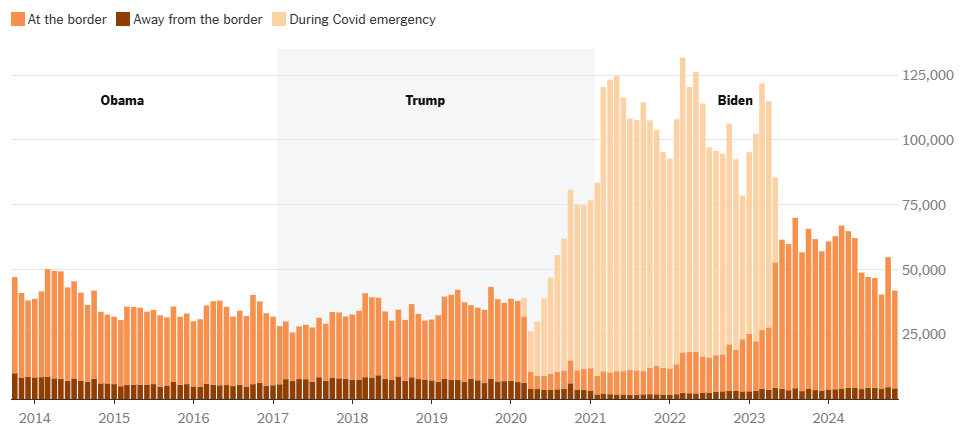
In some ways, under Biden, ICE operated with even less public scrutiny. Despite campaign promises of reform, his administration increased funding for border security and continued Trump-era policies like Title 42 expulsions well into his term. When federal courts intervened, Democrats responded not with structural change but with administrative adjustments and legal footwork.
In the lead-up to Trump’s return, Democrats stopped pretending to offer a clear alternative. Most calls for “pathways to citizenship” or “comprehensive reform” were abandoned in favor of vague appeals to compassion and border security. Their new strategy was managerial: keep migration flows stable, minimize headlines, and protect the economic benefits of undocumented labor.
This doesn’t represent a change in Democratic values but rather reveals the underlying truth hidden by their previous rhetoric. The party doesn’t reject the immigration regime: it prefers that it operate quietly, without mass raids, without media spectacle, and without accountability.
Republicans brandish the system to provoke fear. Democrats preserve it to avoid disruption. In both cases, the logic is the same: stability for capital, precarity for workers, and silence from those forced to live in the shadows.
A Regime of Class Control
The U.S. immigration system isn’t broken. It’s functioning exactly as intended, to keep labor cheap, compliant, and afraid.
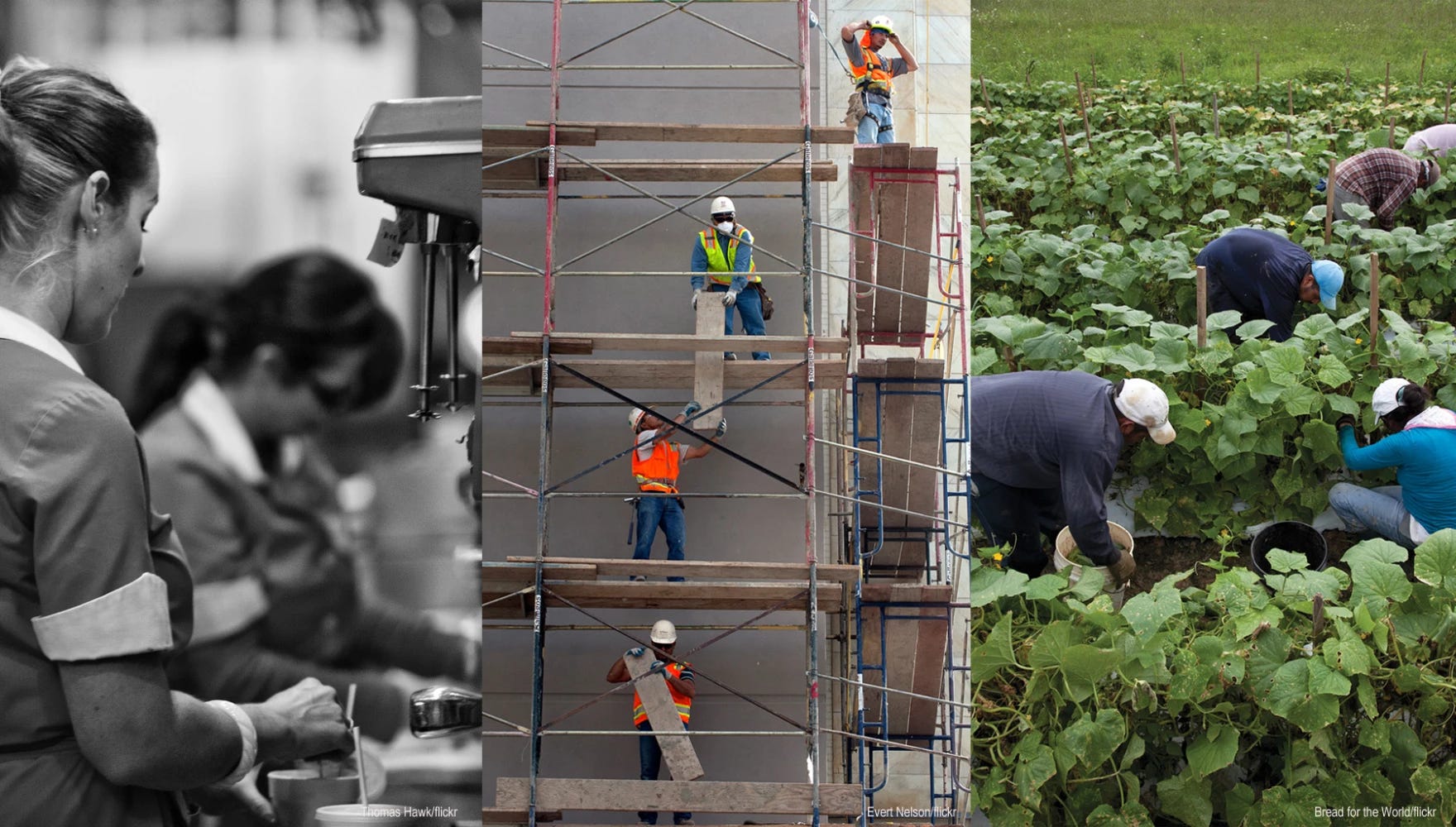
Migrant workers are the backbone of key sectors in the U.S. economy. They harvest crops, process meat, clean hotel rooms, pour concrete, and raise children. But the system doesn’t just depend on their presence; it depends on their precarity.
By criminalizing migration while quietly tolerating undocumented labor, the U.S. creates a tiered workforce:
One group with papers, legal protections, and political rights.
Another with none: forced into silence, invisibility, and constant vulnerability.
At the core of this arrangement is a performance of enforcement. On paper, it is illegal to employ undocumented workers. In practice, the law is almost never enforced against employers, only against workers.
According to the Economic Policy Institute, nearly 8 million undocumented immigrants participate in the U.S. labor force, making up over one in twenty workers nationwide. In agriculture, that number rises dramatically: over half of all field and crop workers are undocumented. Construction, hospitality, food processing, and domestic work also have high concentrations.
Yet employers are rarely punished. Out of tens of thousands of employers suspected of hiring undocumented labor, prosecutions rarely reach 15 per year, and have only exceeded 20 twice. Fewer than 1% of all I-9 audits lead to criminal charges.
This selective enforcement exposes the real function of immigration policy. It protects the profits of agribusiness, real estate developers, and service conglomerates, while keeping the workers who power them permanently deportable. Workers are blamed. Employers are shielded. The message is clear: undocumented labor is welcome, as long as it stays fearful and quiet.
This is how capital disciplines labor. A documented worker can organize. An undocumented one cannot. A documented worker can demand better wages. An undocumented one can’t even demand their paycheck.
The system also operates through strategic division. The existence of a deportable underclass weakens the bargaining position of all workers. When one segment of the workforce can be paid less, denied protections, and silenced by fear, it becomes a benchmark against which all labor is devalued. Employers don’t just extract more from undocumented labor; they use that precarity to suppress demands from everyone else.
The threat of enforcement doesn’t stop at the border. It stalks those already inside: on the factory floor, in the restaurant kitchen, at the construction site. It is not a gate. It is a chokehold.
Both political parties understand this, but they manage it differently.
Democrats often gesture toward inclusion, but their actions preserve the very system they decry. Their “reform” proposals lean heavily on border security and rarely challenge the economic structure that makes undocumented labor so profitable. Calls for “pathways to citizenship” have faded from mainstream political discourse. Enforcement budgets rise year after year, even under Democratic control.
Republicans, meanwhile, channel resentment toward the workers themselves. Trump’s deportation threats and militarized rhetoric signal a shift from labor management to labor terror, not because he aims to dismantle the system, but because he wants to show he can brutalize it more effectively.
In both cases, the border becomes a tool of domestic class discipline. It divides the working class into “legal” and “illegal,” with the second group used to keep the first in check.
This is not a crisis of immigration. It is a strategy of suppression. When workers are deportable, employers are untouchable.
And when immigration enforcement becomes a tool of labor control, every workplace becomes a checkpoint.
Border Violence Is Not New, It’s Evolving
The current wave of crackdowns is often framed as an aberration, a radical break from democratic norms. But this framing is a lie. What we are witnessing is the maturation of the system, not a deviation.
From the moment the United States defined its borders, violence has been the means of maintaining them. The 1882 Chinese Exclusion Act didn’t just close the door to one nationality; it established a racial logic of belonging that would be enforced through law, labor discipline, and physical exclusion. The U.S. Border Patrol itself was founded in 1924, the same year the Immigration Act formalized national-origin quotas designed to preserve a white demographic majority.
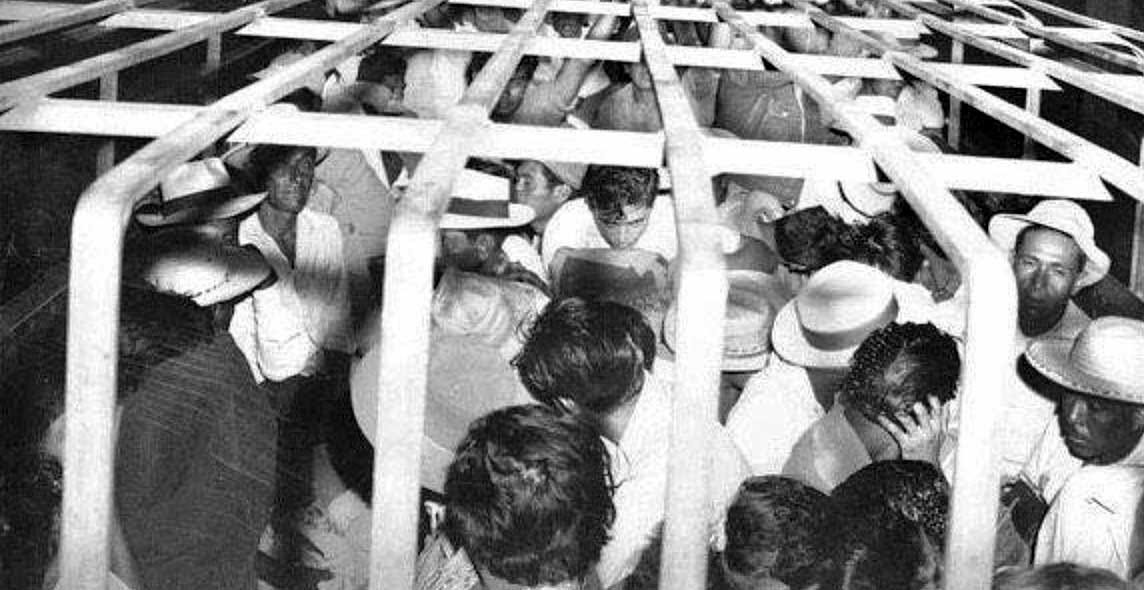
In 1954, the openly racist Operation Wetback, a military-style campaign to remove Mexican laborers, swept through the Southwest with mass arrests, roundups, and deportations, often without due process. At the time, many of the workers targeted had been legally brought in under the Bracero Program to fulfill U.S. labor needs during World War II. Once their labor was no longer essential, they were discarded.
In the 1990s, the Clinton administration launched Operation Gatekeeper and similar programs that dramatically expanded border fencing, surveillance, and militarization. These policies funneled migrants into the most dangerous desert crossings, leading to thousands of deaths over the decades. The supposed rationale was to deter crossings, but the result was a permanent infrastructure of death and deterrence that neither party has meaningfully challenged.
After 9/11, the line between immigration enforcement and counterterrorism fully dissolved. Homeland Security was created. ICE was born. Border policy became national security policy, infused with the logic of war, surveillance, and preemption. The Obama and Biden administrations built upon this dynamic rather than weakening it.
Each new escalation was justified by crisis: a flood of drugs, a terrorist threat, an unmanageable surge. But these justifications are cyclical. The infrastructure remains. Today, that logic reaches into U.S. streets, as Trump deploys National Guard troops and Marines in Los Angeles, proof that each “crisis” simply extends the same apparatus of repression onto new terrain.
The immigration regime evolves through permanence layered on top of panic. It adapts to preserve power rather than protect people. And while its methods modernize, from biometric databases to AI-enhanced surveillance, its purpose stays the same: to divide, discipline, and dominate.
What feels new today is merely the refinement of something very old.
We’ve just seen how U.S. immigration enforcement functions as a bipartisan tool of domestic class control. But the violence immigrants face doesn’t begin at the border. To see the full picture, we have to examine how U.S. policy that is designed to protect capitalist profits manufactures displacement, creating both an exploitable class of unprotected workers at home and the very “crisis” used to justify escalating repression.
A Crisis Designed to Last (Part Two)
Imperialism, Displacement, and the Global Logic of Control
will be published Tuesday, July 22 at 11 AM ET.
Subscribe to be notified when it goes live.
Further Reading
Understanding U.S. immigration enforcement requires more than outrage; it demands analysis. The books below help expose the immigration regime not as a broken system, but as one functioning exactly as intended: to control labor, suppress dissent, and preserve the unequal order. I’ve selected two texts to deepen the arguments explored in this first half.
Liberal Critiques
The Land of Open Graves by Jason De León
A visceral, forensic look at how U.S. policy turns the desert into a weapon. A brutal indictment of a system that kills by design.
Marxist Foundations
The Politics of Immigration: Questions and Answers by Jane Guskin and David L. Wilson
A concise, unapologetically Marxist challenge to the myths that dominate immigration discourse. This book connects U.S. border enforcement to capitalist labor needs, imperial displacement, and the mechanisms used to divide the working class.
Understand the world. Change the world.
You’ve read this far for a reason.
You’re not here to be comforted; you’re here because something isn’t adding up.
Let’s figure it out together.
Weekly essays from Concrete Analysis.
Direct. Unapologetic. Grounded in reality.
If something in this piece resonated or challenged you, I’d love to hear your thoughts in the comments below.